
In urban areas and areas affected by emissions from traffic, industry, or heating, carbonaceous aerosols often represent a substantial fraction of PM2.5 mass. Accurate characterization of these components is essential for source apportionment, scientific research, and air quality management.
Thermal-optical OC/EC analysis of filter samples remains a reference method for this purpose. It provides insight into emission sources and atmospheric transformation processes. While the analytical technique is robust, the surrounding workflow can limit overall efficiency and number of samples processed.
As monitoring requirements increase, laboratories with the capacity to process large sample volumes efficiently while maintaining data quality have a clear advantage. Automating sample handling with an autoloader, which processes up to 50 preloaded filter samples in sequence with minimal operator input, makes this possible and enables routine OC/EC analysis at scale.
PM2.5 remains a major air quality concern due to its well-documented impacts on human health and climate. In Europe, it is specifically addressed under the Directive on ambient air quality and cleaner air for Europe 2024/2881. Elemental carbon is also recognized as harmful and is addressed in specific context, such as occupational exposure to diesel exhaust under Directive (EU) 2019/130.
OC/EC measurements are used by established monitoring networks, such as the IMPROVE network in the United States. The IMPROVE network tracks aerosol composition, visibility, emission sources, and long-term air quality trends in protected areas such as national parks. Many of samples collected were analyzed with our DRI 2015 Series 2 OC/EC analyzer.
Another example of network carrying out OC/EC is the National Aerosol Particle Chemical Speciation Network in China that conducted daily aerosol sampling to study the sources and formation of PM2.5 haze and to track long-term trends in aerosol composition at national and regional levels (Xu Dao, 2019).
The high sampling frequency in these networks generates large numbers of samples that must be processed continuously. Automating sample handling with an autoloader is particularly beneficial in such cases, as it enables efficient, high-volume analysis with minimal operator involvement.
Despite its importance, OC/EC analysis still relies heavily on manual sample handling. Filters are usually loaded into the analyzer one by one, requiring continuous operator involvement. The manual workflows are then limited not only by the number of samples processed in one day and the efficiency of handling large sample sets, such as for networks but also by the downtime of instruments outside working hours.
While the quality of individual measurements is not affected, it restricts how efficiently laboratories can convert collected samples into usable data. Over time, this can reduce responsiveness, especially when fast insights are needed to understand pollution events or support ongoing monitoring efforts.
Laboratories often handle large numbers of filter samples collected for different analyses, including chemical characterization and OC/EC determination. When these filters must be loaded one by one, sample processing becomes slow, operator-dependent, and difficult to scale.
The result is a practical bottleneck: fewer analyses can be completed within a working day, instrument time is underused overnight, and the available dataset may be too limited for short-term and day-to-day understanding of variability in PM2.5 composition.
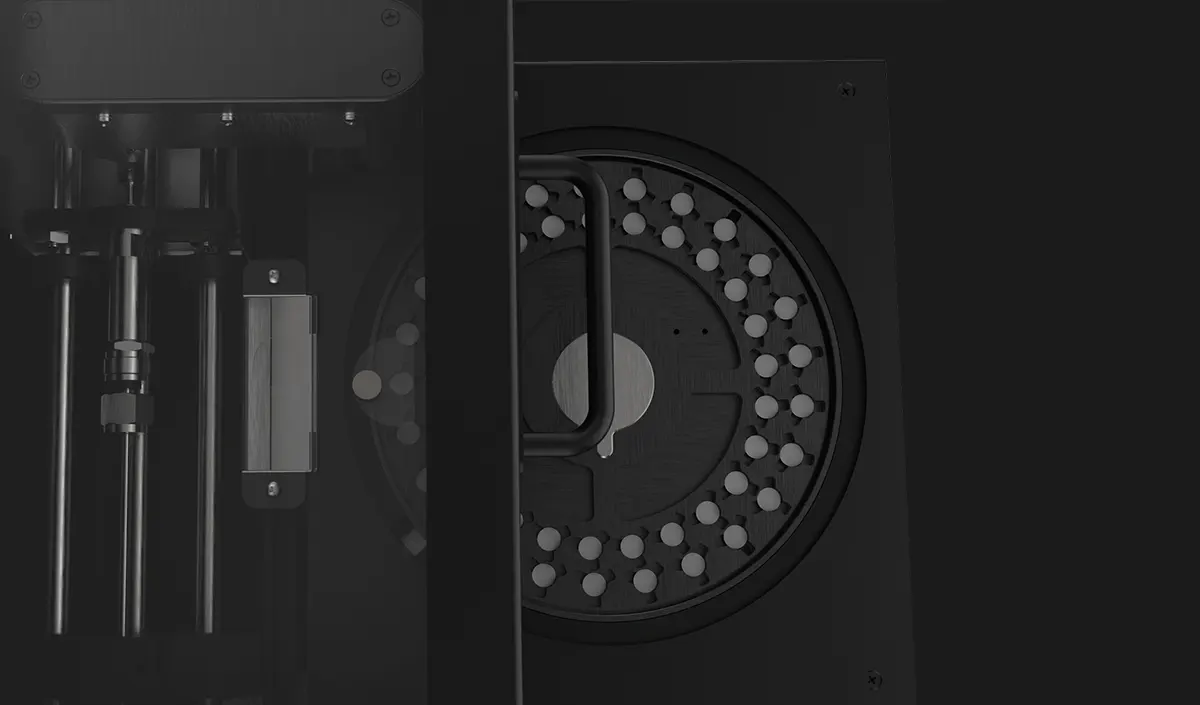
An autoloader addresses this limitation by automating sample exchange and allowing up to 50 filters to be queued in a single sequence. Thermal-optical carbon analysis can therefore move from a manually interrupted workflow to a more continuous analytical process.
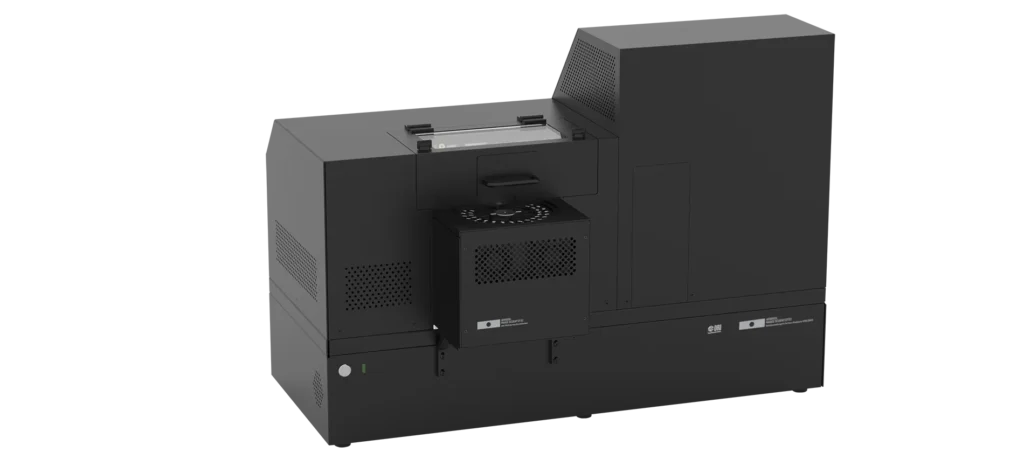
DRI-2015 Series 2, Laboratory OC/EC analyzer with autoloader for 50 samples
Because analysis can continue without supervision, including overnight and on the weekends, instrument time can be used more fully while laboratory staff are freed from repeated manual loading and can focus on other analytical or interpretive tasks.
Automation also reduces opportunities for sample contamination and lowers the risk of handling-related errors between runs, which supports more consistent operation.
The value of automation becomes clear in day‑to‑day laboratory work. By reducing manual intervention, an autoloader allows laboratories to process more filter samples within the same timeframe, without increasing staffing requirements. Operators can shift their focus from repetitive handling tasks to data interpretation, quality control and other analytical work.
Automation also improves workflow continuity. Because analysis can continue unattended, including overnight and on weekends, instrument time is used more efficiently and downtime is minimized. This is particularly important for monitoring campaigns generating large numbers of PM2.5 samples over short periods.
| Manual workflow limitations | With automation – DRI Series 2 with autoloader |
|---|---|
| Filters loaded one by one | Up to 50 filter samples processed automatically |
| Continuous operator involvement | Minimal operator involvement |
| Downtime outside of working hours | Continuous operation (overnight, weekends) |
| Slow handling of large sample sets | Efficient handling of large sample sets |
| Slower data interpretation | Faster data interpretation |
| Time spent on repetitive loading | More time for data interpretation and analytical tasks |
| Risk of handling errors | More consistent workflow |
| Higher contamination risk | Lower contamination risk |
At the same time, automated sample loading enhances consistency and reproducibility. By minimizing operator-dependent variability, laboratories obtain more stable processing conditions and more reliable results, which is essential for long-term monitoring and collaborative studies.
By simplifying the analytical workflow, autoloaders make it easier to integrate OC/EC analysis into routine PM2.5 monitoring. What was previously a time-intensive task becomes a more practical and scalable part of daily laboratory operations.
Beyond workflow efficiency, the Aerosol Magee Scientific Autoloader is designed for reliable, high-quality operation. With capacity for 50 preloaded samples, it enables fully automated analysis for more than 24 hours.
To support sample integrity, the system features a cooling system and an over-pressurized holder chamber, helping to maintain sample stability while reducing contamination risk. Combined with the DRI Series 2 platform, intuitive software ensures efficient control of the analysis process and consistent OC/EC measurements.
OC/EC analysis remains a key method for understanding the composition and sources of PM2.5. However, its practical impact depends not only on analytical accuracy, but also on how efficiently samples can be processed.
By automating sample handling, autoloaders remove a key operational bottleneck. They do not change the nature of the data itself, but make it possible to analyze more samples within the same time constraints, with less manual effort and greater consistency.
The result is a more streamlined workflow, better use of laboratory resources and improved ability to keep pace with modern monitoring demands. In a field where timely and reliable data is essential, this shift from manual to automated processing supports laboratories in turning collected PM2.5 samples into actionable insight more efficiently.
Find out more about DRI-2015 Series 2, Laboratory OC/EC analyzer.
References:
Aerosol d.o.o.
Kamniška 39A
1000 Ljubljana
Slovenia, Europe
+386 1 4391 700
Aerosol USA Corp.
10157 SW Barbur Blvd Suite 100C
Portland, OR 97219 USA
+1 510 646 1600