Events
|
April 17, 2026

At the ACTRIS Science Conference 2026

Ana Mohar
Marketing specialist

Table Of Contents

Subscribe to our newsletter
Privacy policy*

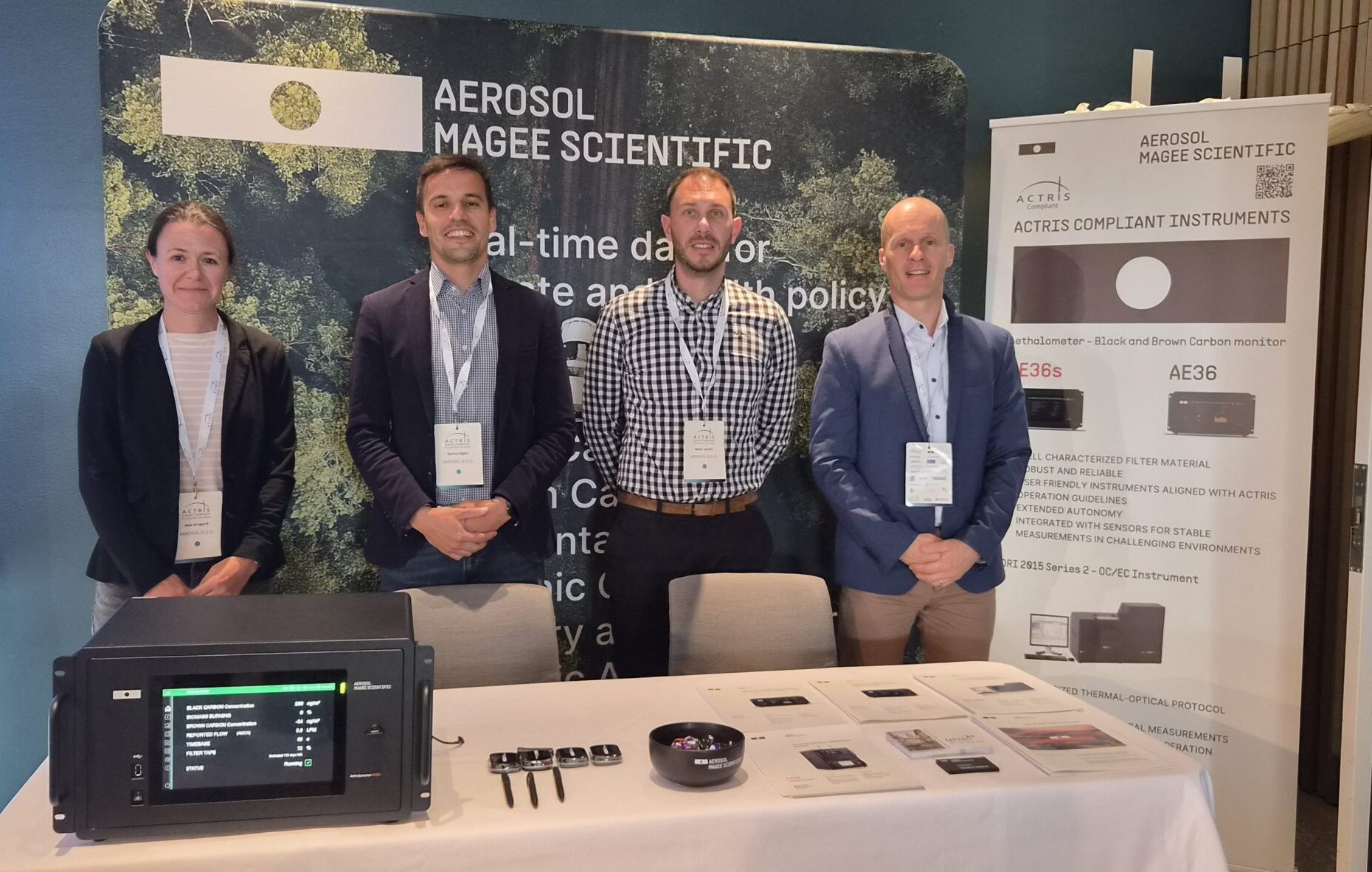
Aerosol Magee Scientific presented at the ACTRIS Science Conference 2026.

ACTRIS is an international research infrastructure and network focused on aerosols, clouds, and trace gases, supporting research on air quality and atmospheric composition. The conference took place from 20 to 23 April 2026 in Oslo, Norway.

Our team was glad to connect and exchange insights on advances in carbonaceous aerosol monitoring at our booth, during poster presentations, and throughout the conference program.

Below is a detailed overview of our scientific poster contributions and their key takeaways.


Characterisation of aerosol types using the Aethalometer AE36s and 2D AAE approach

Presenter: Asta Gregorič
Poster: 103
Session: Poster session #1
Time: Tuesday, 21 April 2026, 17:00–19:00

  • High resolution 9 λ AE36s measurements reveal distinct 2D AAE absorption fingerprints for BC, BrC, and mineral dust.
  • New two range AAE (400–590 nm, 590–950 nm) approach enables clearer separation of traffic, biomass burning, photochemically aged BrC, and dust events.
  • Improved source apportionment accuracy supports precise detection of special events such as Saharan dust intrusions.

Key takeaway:
Advanced multi‑wavelength absorption analysis with the AE36s enables more robust aerosol source identification and improved detection of complex events in atmospheric monitoring.
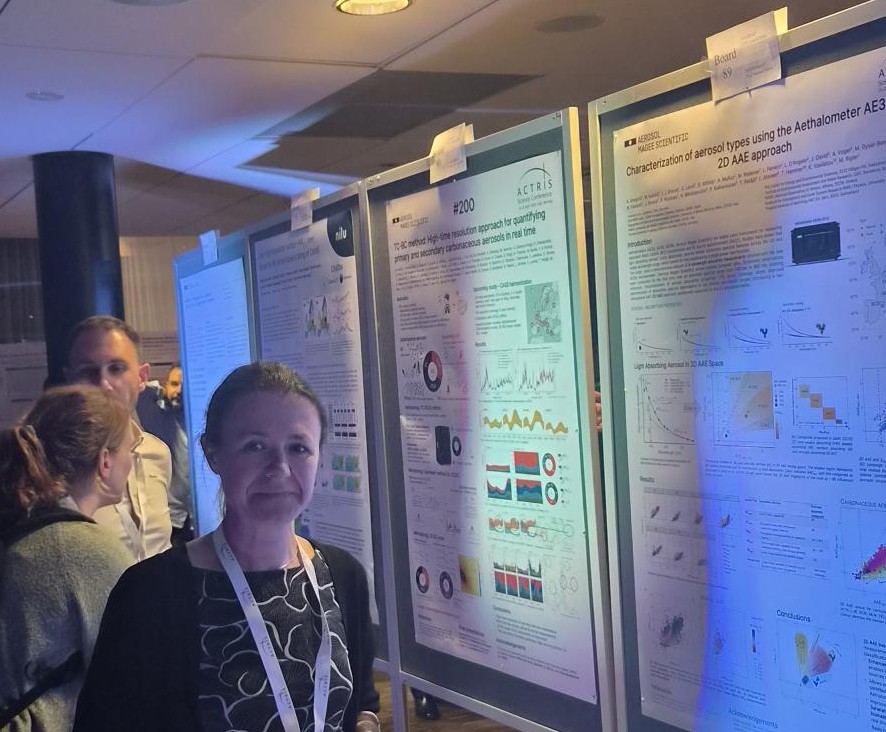

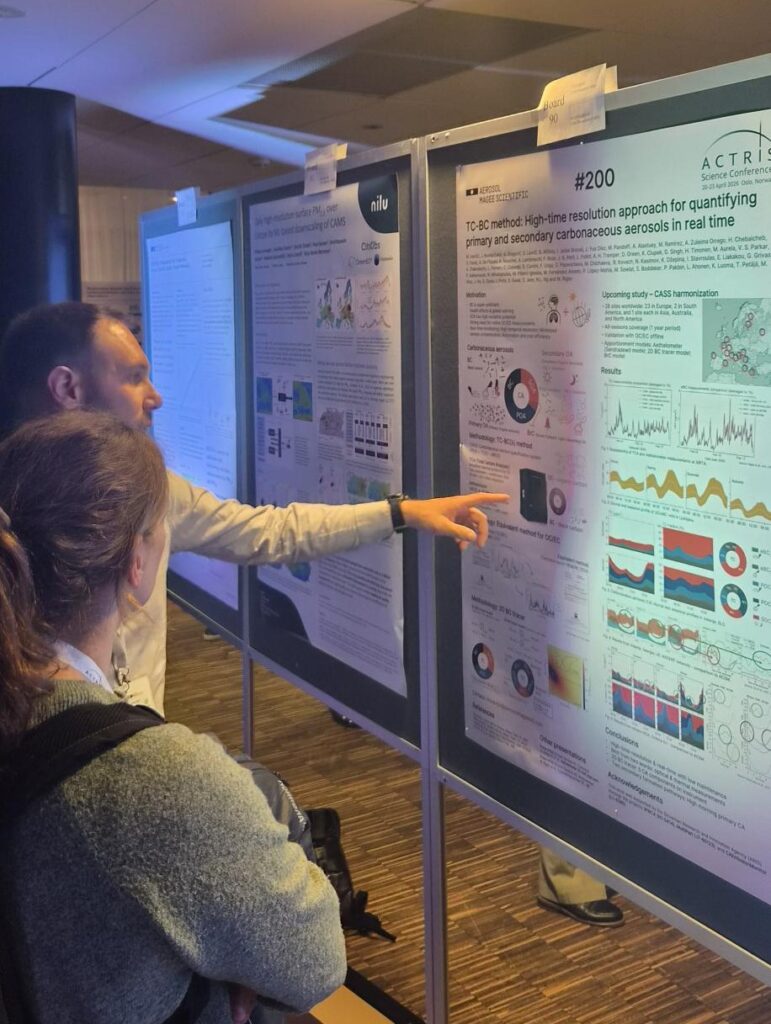
TC‑BC method: High‑time resolution approach for quantifying primary and secondary carbonaceous aerosols in real time

Presenter: Matic Ivančič
Poster: 200
Session: Poster session #1
Time: Tuesday, 21 April 2026, 17:00–19:00

  • New extension of the BC tracer model enables separate quantification of primary OC from liquid fuel and solid fuel combustion.
  • Real time OC, BC, and SOC/POC apportionment becomes possible through the combined CASS system (TCA08 + AE33/AE36s) with two source specific OC/BC ratios.
  • High time resolution measurements reveal distinct seasonal and diurnal SOC formation patterns, including both daytime photo oxidation and nighttime NO₃ driven oxidation.

Key takeaway:
The TC‑BC method enables real‑time separation of primary and secondary carbonaceous aerosol sources, providing detailed insight into SOC formation processes.

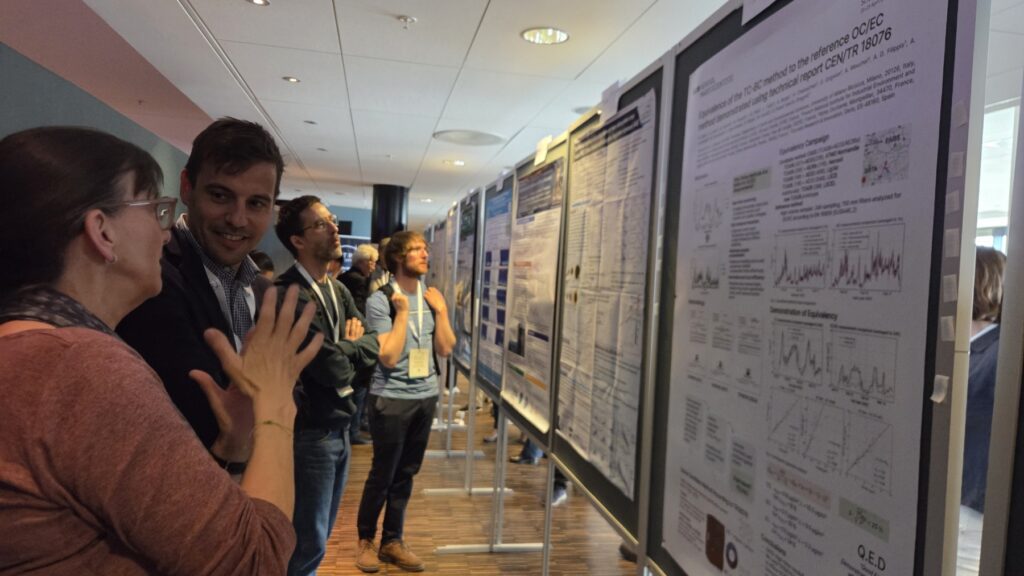
Equivalence of the TC‑BC method to the reference OC/EC method demonstrated using technical report CEN/TR 18076

Presenter: Martin Rigler
Poster: 102
Session: Poster session #2
Time: Wednesday, 22 April 2026, 10:00–12:00

  • Intercomparison at ACTRIS SIRTA demonstrates that the TC–BC method meets CEN/TR 18076 requirements and achieves equivalence with the reference EN 16909 OC/EC method.
  • Parallel measurements with multiple TCA08/AE33 systems and the new TCA–AE36s prototype show strong agreement with offline EUSAAR 2 filter analyses.
  • Results support harmonized, automated, and real time OC/EC monitoring across Europe, enabling standardized regulatory use of TC–BC.

Key takeaway:
The TC‑BC method is confirmed as equivalent to the reference OC/EC method, supporting harmonized, automated, and regulatory‑ready real‑time monitoring across Europe.
HEADQUARTERS

Aerosol d.o.o.
Kamniška 39A
1000 Ljubljana
Slovenia, Europe
+386 1 4391 700

USA Office

Aerosol USA Corp.
10157 SW Barbur Blvd Suite 100C
Portland, OR 97219 USA
+1 510 646 1600